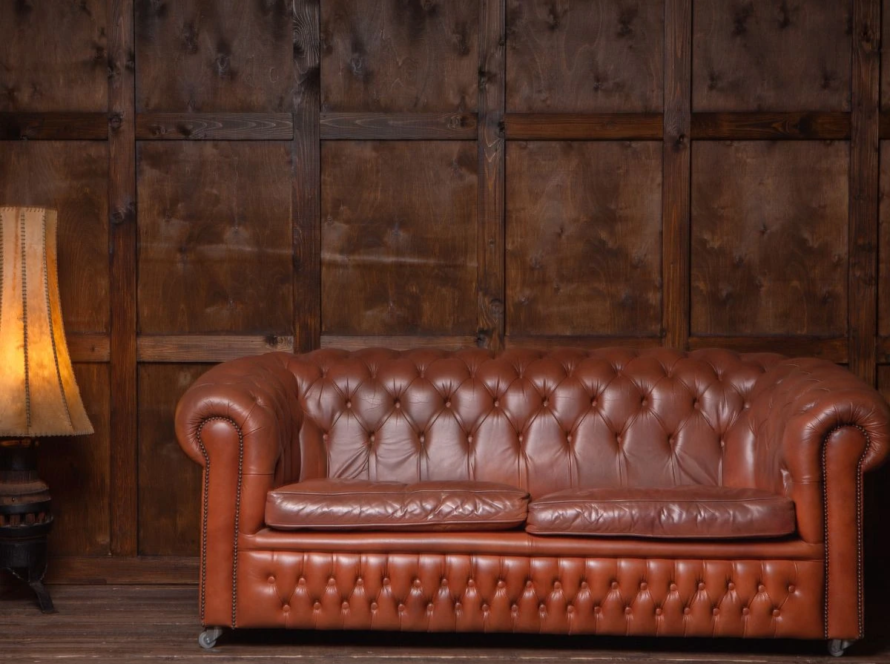
It starts as a slight darkening on the headrest of your favourite leather armchair. Over time, that small patch becomes a deep, glossy stain that feels tacky to the touch. Eventually, the leather might even start to peel or crack. If this sounds familiar, you are likely searching for how to remove greasy head marks from leather sofa surfaces before the damage becomes permanent. These accumulated head grease and body oils are a common but destructive issue for any high-quality leather couch.
While your first instinct might be to reach for a bottle of dish soap or a damp cloth, the reality is that leather is a complex organic material. Treating it with the wrong substances can turn a minor cosmetic issue into permanent structural damage. This guide explores why these marks happen and why professional restoration is the safest and most effective way to protect your investment.
Why Does Hair Grease Damage My Leather Furniture?
To understand how to fix the problem, we first need to look at the science behind the stain. Human skin and hair naturally produce oils known as sebum. These oils are produced by our sebaceous glands to keep our skin and hair hydrated. However, what is good for your scalp is often devastating for leather furniture.
The Chemical Breakdown of Leather Oil
Most modern leather sofas are finished with a protective top coat, or lacquer. This layer is designed to repel spills and provide a uniform colour. However, sebum is slightly acidic. When you rest your head against the sofa day after day, this leather oil sits on the surface and slowly begins to dissolve that protective lacquer.
Once the top coat is breached, the oils soak directly into the leather fibres. This leads to a process known as fibre deterioration. As the oils saturate the hide, they displace the moisture and natural lubricants that keep the leather flexible. Without these, the structural integrity of the material begins to fail from the inside out. This same process can affect other leather goods, such as a leather purse or even car seats, where contact with skin is frequent.
Visible Signs of Grease Stains and Saturation
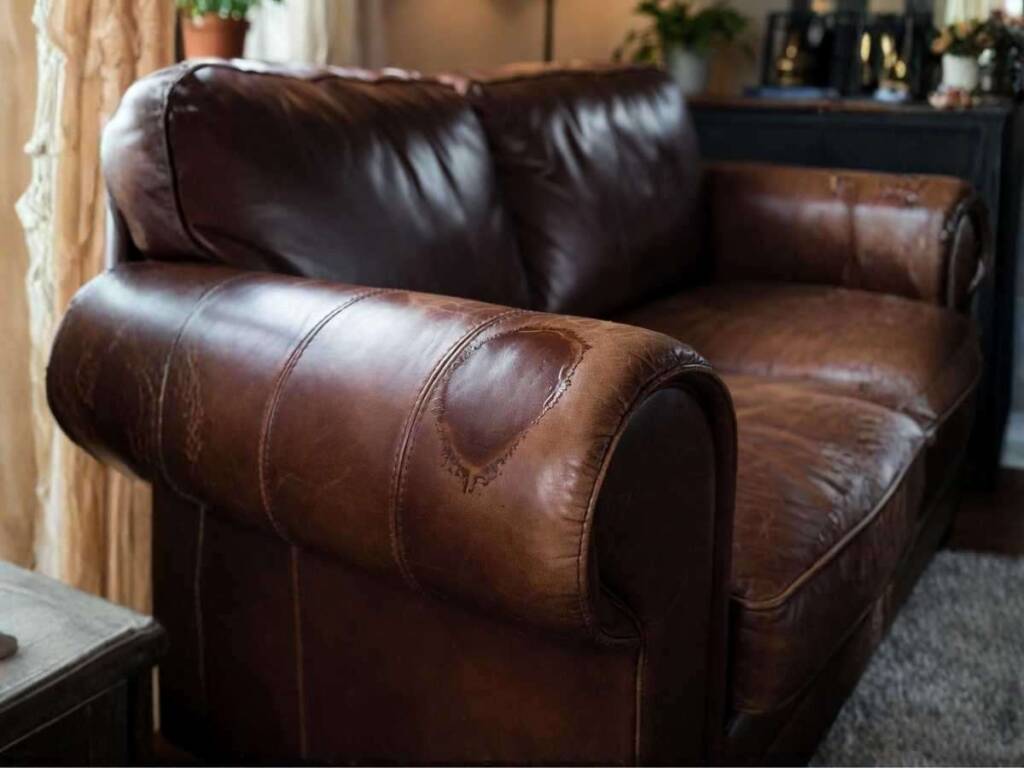
The most obvious sign of oil damage is darkening and discolouration. This results in a dark, shadowy patch that does not disappear when wiped. Because grease stains are acidic, they actually alter the chemical balance of the leather. This leads to permanent oil and grease stains that standard cleaners cannot touch.
As the oils break down the leather’s finish, the area becomes tacky or sticky. This texture often attracts dust, clothing fibres, and pet hair, which makes the mark look even worse. In advanced stages, the leather may begin to flake or develop small cracks, known as crazing. This is a clear warning that the leather is becoming brittle and is at risk of tearing.
The Professional Extraction Process: How the Experts Handle Stain Removal
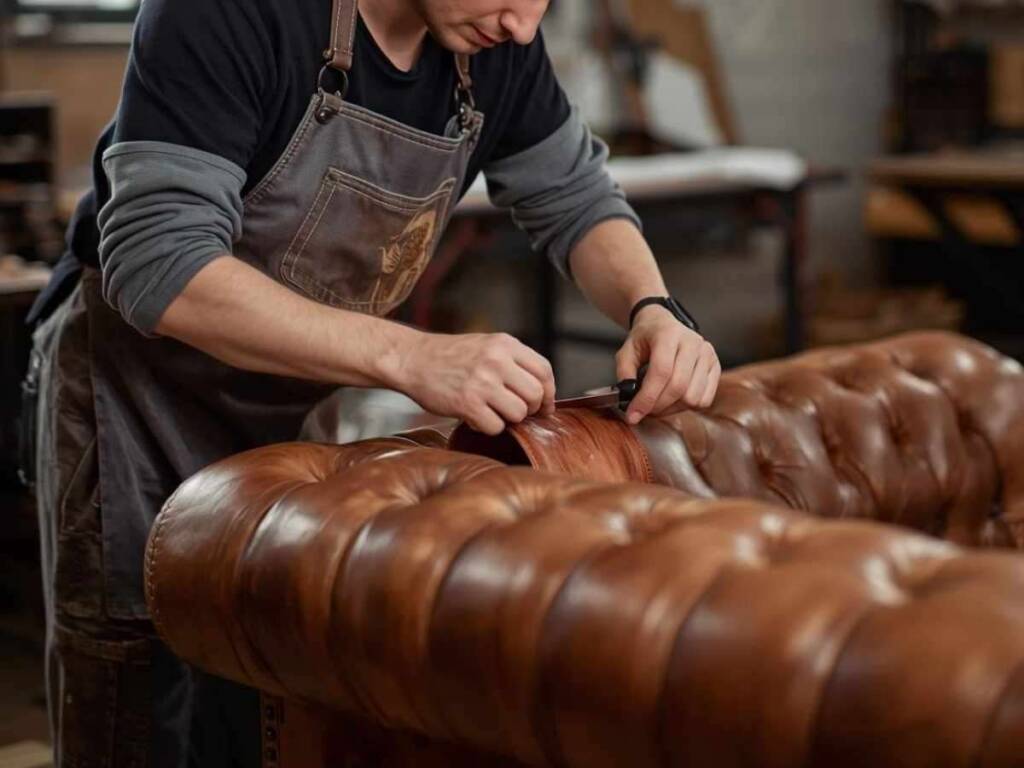
When you hire a professional service, the process is far more scientific than a simple wipe-down. Professionals use a multi-stage approach to ensure stain removal is actually achieved, rather than just hiding the problem. This is one of the key reasons why leather sofa cleaning needs professionals for stubborn stains.
Initial Assessment and Identification of Stains
Not all leather is the same, and a “one size fits all” approach is dangerous when treating stains. Aniline leather is highly porous, making it incredibly difficult to clean. Pigmented leather is more durable but requires specific pH-balanced solutions.
A professional expert will identify your leather type before the cleaning process begins. They check the condition of the finish and the depth of the oil penetration. This ensures they don’t use too much oil or moisture, which could further damage the leather surface. This thorough assessment is part of comprehensive leather furniture care.
Deep Extraction Gels
To remove grease from leather that has soaked into the fibres, professionals use a specialised leather degreaser or degreasing paste. These are applied to the area and left to dwell. Through a process of osmosis, the gel draws the grease and oil out from the centre of the leather and into the paste.
This wicking process is the only way to truly remove stubborn stains and tough stains. In many cases, this must be repeated several times until the paste remains white. This patient, methodical approach is what separates a professional restoration from a quick DIY fix.
Eco-Friendly and Non-Toxic Solutions
These professional-grade solutions provide incredible results without leaving behind harsh residues. This makes professional leather cleaning service service ideal for homes with children or pets, giving you peace of mind that your restored sofa is safe to use immediately.
The Hidden Dangers of DIY Home Removal of Stains
The internet is full of tips for cleaning leather, but many of these can do more harm than good. Using household products on a high-quality leather item is often a recipe for disaster and can lead to costly mistakes. Understanding the hidden dangers of DIY restoration can help you avoid damaging your valuable furniture.
The Problem with Dish Soap and Vinegar
Dish soaps are designed to strip grease from ceramic and metal, which means they have a high pH level. When applied to leather, they do not just remove the head grease; they strip away the essential natural oils that keep the leather supple. Similarly, many people suggest using vinegar as a natural cleaning solution. However, vinegar is highly acidic. It can cause the leather to dry out rapidly or even cause the dye to bleed. Once the internal oils are stripped away, the damage is often irreversible without professional intervention.
Why Powders Often Fail for Oil Spills and Deep Grease
Some people suggest using talcum powder or cornstarch to suck up the oil. While these might work on fresh oil spills on a rug, they are rarely effective for deep-set headrest grease. These powders only sit on the surface and cannot reach the oils that have already migrated deep into the leather’s porous structure.
Furthermore, some suggest using saddle soap or an alcohol cleaner. While saddle soap is great for heavy-duty boots, it can be too alkaline for soft furniture leather. An alcohol cleaner can strip the finish entirely. Aggressive rubbing with a microfiber cloth or a soft cloth and these substances can wear away the delicate grain, leaving you with a sofa that is slightly less greasy but significantly more worn. Following the best way to clean leather sofas ensures you use appropriate methods that won’t cause additional damage.
Beyond Cleaning: Restoration and Protection
Once the grease is gone, the work is only half-finished. Because the oil stains usually damage the original finish, the area often looks dull, faded, or patchy once it has been deep-cleaned.
Recolouring the Damaged Area
If the headrest has lost its colour, professional technicians can perform a precision colour match. We use high-quality dyes to restore the exact shade of your sofa. Rather than just painting over the stain, we blend the repair seamlessly with the surrounding leather.
Conditioning and Nourishing
After the intensive degreasing process, the leather needs to be fed. We apply professional-grade leather conditioner that penetrates deep into the hide. This restores the natural softness of the leather and prevents future cracks. This step is vital for ensuring the leather remains flexible and comfortable.
The Final Protective Barrier Against Future Stains
The last step is the most important for prevention. We apply a new, high-quality leather protection cream or top coat. This acts as a shield, making it much harder for natural body oils or hair products to penetrate the leather in the future. It turns a porous, vulnerable surface into a repellent one, providing a strong defence against future stains.
Maintaining Your Sofa Between Professional Visits
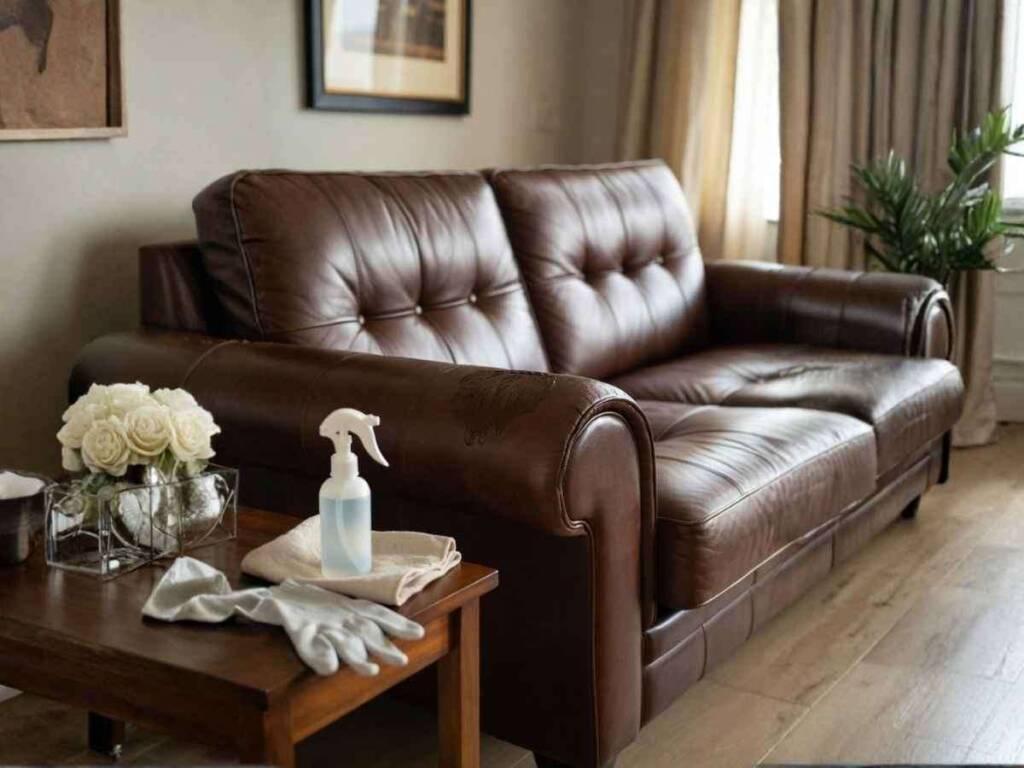
While professional cleaning is essential for removing deep-set marks, you can take simple steps to prolong the life of your furniture. Regular maintenance following our leather furniture maintenance guide helps prevent grease buildup.
Weekly Maintenance
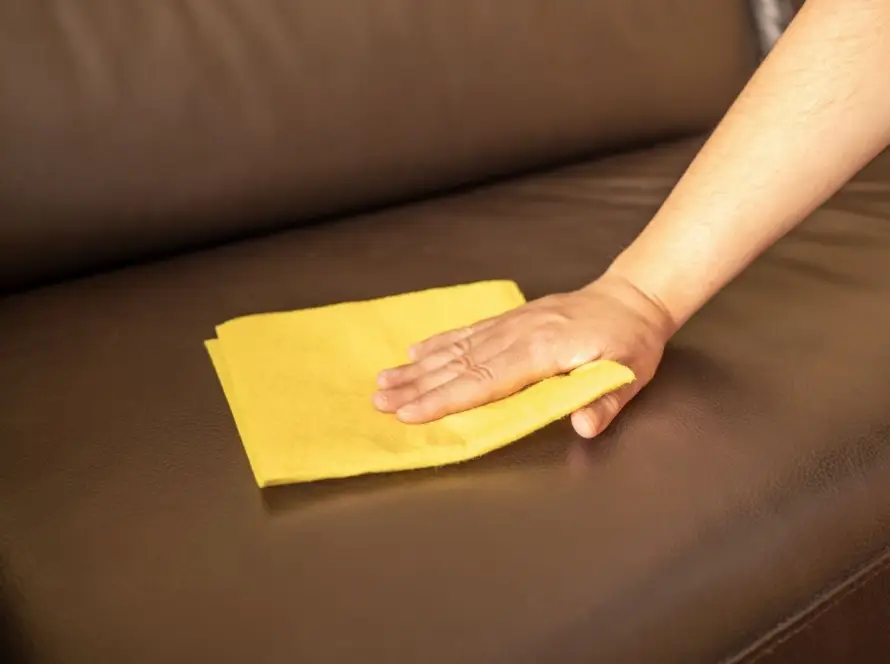
Use a dry cloth or a clean towel to wipe down headrests every week. This removes surface oils before they have a chance to soak in. If you notice a fresh mark, you can use a clean cloth lightly dampened with warm water, but be careful not to soak the area. Always follow up with a dry cloth to remove any moisture.
If you find that your headrest is a high-traffic area, consider using a small throw. This provides a physical barrier between your hair and the leather.
Environmental Factors
Keep your leather sofa away from direct sunlight or radiators. Heat can cause the leather to open its pores, allowing oils to soak in much faster. It can also dry out the hide, making the protective top coat brittle.
Conclusion
Greasy head marks are more than just an eyesore; they are a sign that your leather is under chemical attack. While it is tempting to reach for a kitchen cleaner, the risks to your investment are simply too high. True restoration requires the right balance of deep extraction and delicate care that only years of professional experience can provide.
If you have noticed your sofa headrests becoming dark or sticky, do not wait for the finish to start peeling or the leather to crack. Taking action early can save you the cost of a full replacement and keep your living room looking its best. Let the experts handle it safely, effectively, and with the care your furniture deserves.
Your sofa’s story shouldn’t end with a stain; give your leather a fresh start and rediscover the luxury you fell in love with by speaking to the LeatherXpert team for your restoration quote.
Your sofa’s story shouldn’t end with a stain; give your leather a fresh start and rediscover the luxury you fell in love with by speaking to the LeatherXpert team for your leather restoration quote.